

Invasive species management as part of the dairy value chain in Kenya

Kenya
Focus
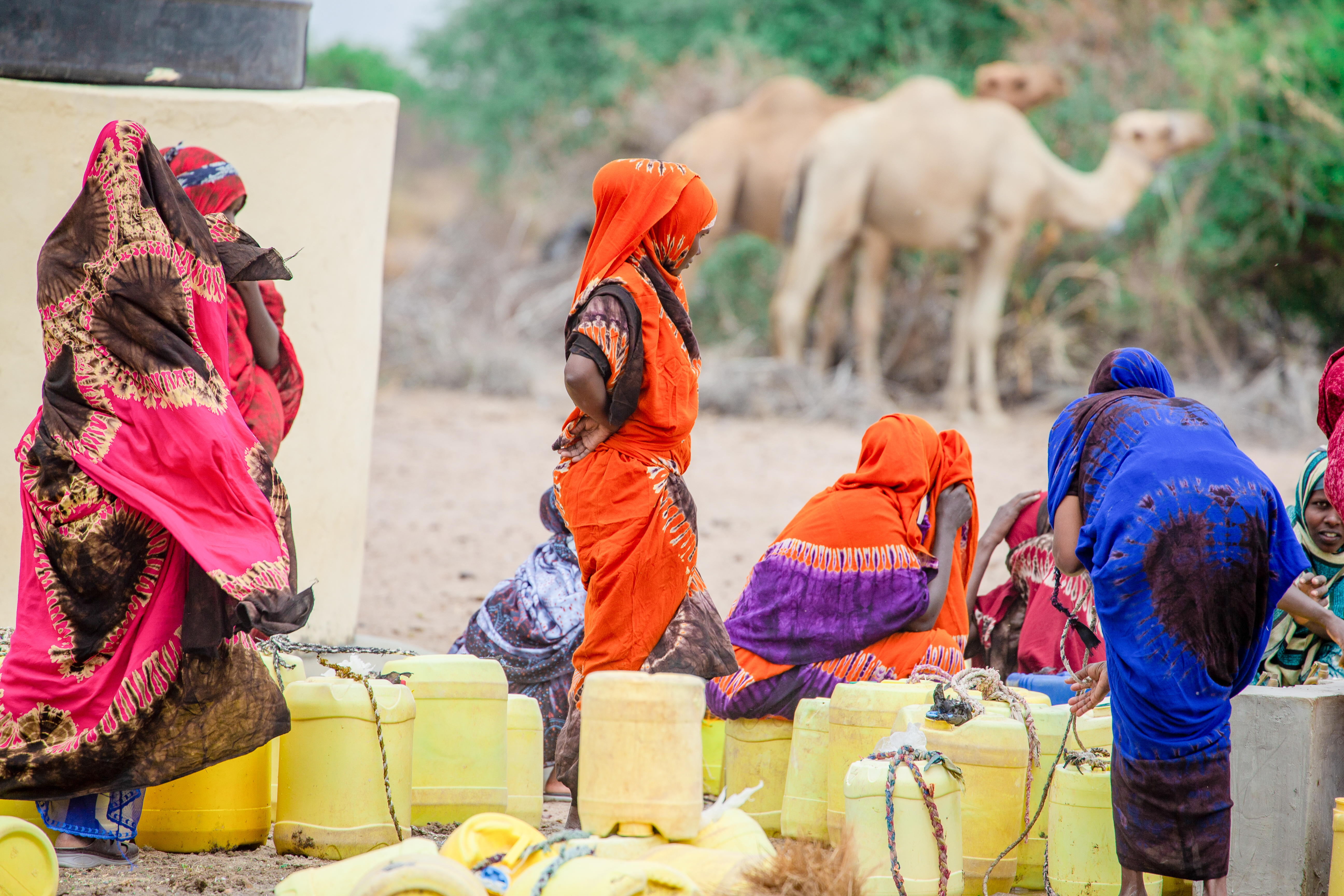
In Kenya, the programme refined its approach to value chain development, recognizing the relevance of livestock rearing for both refugee and host communities in Garissa county. EIIP and enterprise development were integrated to reclaim grazing land and develop local businesses.
A market systems approach was applied to stimulate local markets and generate employment opportunities for refugees and host community members. In 2019, UNHCR and ILO conducted a market systems analysis in Dadaab, Kenya. It identified four potential value chains that could support the self-reliance of local community members in Dadaab. This included waste management, livestock, commodity trading and horticulture, with horticulture and waste management being selected as priority. The PROSPECTS team revisited this assessment and realized the socio-cultural aspects that made the prioritized value chains ill matched with the local refugee community. The predominant refugee group, the Somalis, did not traditionally farm and nor would they handle waste. While the livestock value chain wasn’t prioritized in 2019, the team launched a rapid assessment to update the initial analysis, and explore how it could be tapped into.
One key bottleneck in the value chain was fodder production. The dry season reduced the quantity and quality of fodder available for grazing. Furthermore, invasive species were encroaching on grazing land. As a result, PROSPECTS worked to strengthen and form community groups to support fodder production, and introduced labour intensive methods to clear a particularly invasive species from grazing lands.
The invasive species, Prosopis Juliflora, was particularly problematic for cattle herders because it’s sharp thorns are poisonous to their livestock. Cleaning and restoring the land using a labour intensive approach directly generates over 1,100 jobs at the community level, while work also helped make sure of the harvested Prosopis. In partnership with the Kenya Forest Research Institute, the programme supported local enterprises to build production around the harvested Prosopis. Local enterprises produced charcoal briquettes, animal feed and prosopis-based bee products at scale, contributing to local job creation and business growth.
Efforts also linked to a wider national strategy on Prosopis management. Rather than only managing the species through removal, PROSPECTS advocated for management by utilization at the community level. A county wide stakeholder consultation was convened in Turkana to create awareness for management by use and to start adapting the national strategy at the county level.
Continue reading
Case study
Approach to Integrated Market Systems: Dairy value chain, Somali Region

Ethiopia