
Engaging the General Federation of Workers in EIIP Interventions in Iraq

Iraq
Focus
Engaging trade unions in a technical committee led to joint wage recommendations and demonstrated the potential for greater refugee representation within Employment-Intensive Investment Programmes (EIIP).
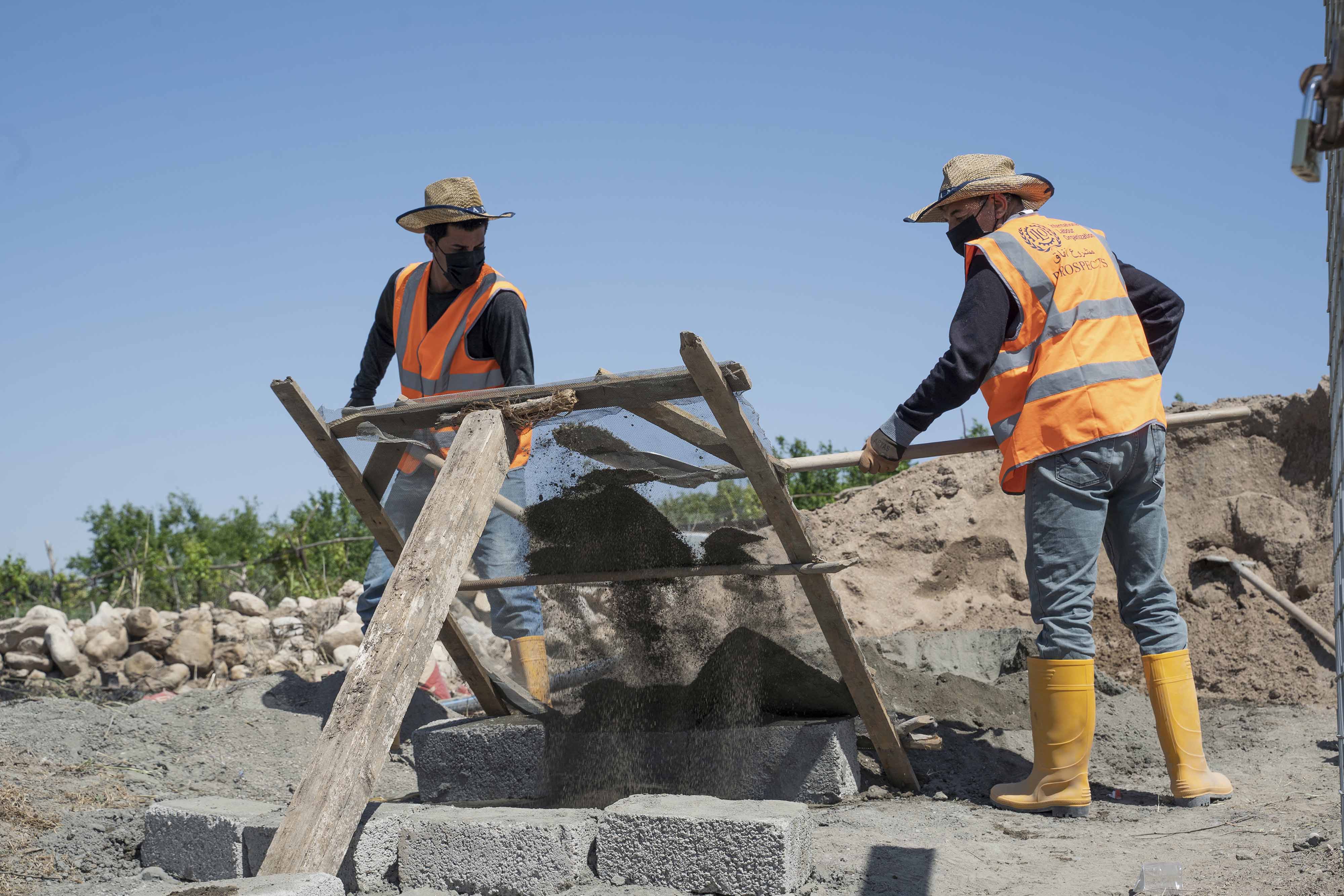
In Iraq, EIIP interventions have included green works, construction of public facilities, and conservation of cultural heritage sites in areas hosting refugees, IDPs and returnees. A core achievement of the programme has been the integration of decent work into national infrastructure development planning.
PROSPECTS in Iraq involved trade unions through the creation of a technical committee to oversee and guide working conditions on project sites. The unions played a role in advising EIIP workers on their rights and supported the election for EIIP worker representatives. The elected representatives pushed for the development of a recommended wages list for 20 occupations in the construction sector. A recommended wages list was drawn up jointly with the construction workers’ union and contractors’ association in Dohuk, providing a positive example of local partners taking on responsibility and ownership of the decent work agenda.
- To strengthen working conditions across all EIIP sites in iraq, the ILO established structured collaboration with the General Federation of Workers. Following consultations, the unions and ILO jointly designed a practical model to mainstream decent work in EIIP, centered around five key actions:
Worker representation: Organizing elections at each EIIP site to select worker representatives empowered to voice concerns and defend workers’ rights. - Awareness raising: Conducting weekly sessions on labour rights and relevant legal frameworks.
- Worksite monitoring: Carrying out regular site visits to assess working conditions using agreed indicators and reporting templates.
- Tripartite engagement: Participating in monthly technical meetings with government counterparts and contractors to resolve challenges and agree on corrective measures.
- Grievance management: Managing the project hotline and following up on worker complaints and disputes.
This model helped shift perceptions of trade unions in the construction sector—from a primarily inspection role- to an active partner in improving working conditions on work sites. The ILO supported this transition by building the capacity of union members, enabling them to effectively implement the EIIP decent work model across project sites.